41 drag each label into the proper position to identify the type of bone cell described
Solved Drag each label into the proper position to identify - Chegg See the answer Drag each label into the proper position to identify the type of bone described. Expert Answer 100% (69 ratings) Compact bone - found lining the superficial regions of all bones - also called cortical bone - made up of os … View the full answer Previous question Next question Directional Terms for Anatomical Position and Major Body Regions The bones are deep to the muscles. The human body consists of an axial portion, the head, neck, and trunk, and an appendicular portion, the upper and lower limbs and their girdles. Each of these major portions of the body is divided into regions with special names to facilitate communication and to aid in locating body components.
1.6 Anatomical Terminology - Anatomy and Physiology | OpenStax Superior (or cranial) describes a position above or higher than another part of the body proper. The orbits are superior to the oris. Inferior (or caudal) describes a position below or lower than another part of the body proper; near or toward the tail (in humans, the coccyx, or lowest part of the spinal column). The pelvis is inferior to the ...

Drag each label into the proper position to identify the type of bone cell described
Types of Bone Cells | Osteoclasts, Osteoblasts, & Osteocytes Osteocytes are located inside the bone and have a connection with each other and with other cells with the help of their long branches. Osteocytes are at the perfect position to sense any pressure or mechanical strain in the bone. It is estimated that osteocytes comprise about 95% of the total of cells of the bone. Module 2 Skeletal System Flashcards | Quizlet Drag each label into the proper position to identify the type of bone described. Bone tissue is categorized into two major types: compact and spongy each possessing structural and functional aspects. Compact bone, the more dense of the two is well suited for withstanding high levels of mechanical stress and is found on the superficial portions of all bones and along the diaphyses of long bones. Drag each label into the proper position to identify the type of bone ... 1. Differentiate into osteoblasts 2. Stem cells: 1. Bone building cell 2. Overactivity results in increased bone density: 1. Have a ruffled border2. Massive multinucleate cell. 3. Abundant in mitochondria
Drag each label into the proper position to identify the type of bone cell described. Famous Honolulu Typing School puzzle? - ForNoob Drag each label into the proper position to identify the type of bone cell described. Why did the USSR have more strategic ballistic missiles than the US during the latter stages of the Cold War in 1968-1991? my cousin wants to play strip poker with me she wants it badly should i do it? How do you draw a line structure for (CH3)CCO2CH(CH2CH3)2 ? (Get Answer) - Which cells secrete bone matrix? Choose the best answer ... H Drag each label into the proper position to identify the type of bone cell described. Bone cells encased in matrix Overactivity results in increased bone density Trapped in lacunae Differentiate into osteoblasts Have a ruffled border Massive,... (Solved) - Drag each label into the proper position to identify the ... Drag each label into the ... Answered: Drag each label into the appropriate… | bartleby Transcribed Image Text: Drag each label into the appropriate position to identify whether the statement or image depicts something true or false about the specimen pictured below. Larger proportion of extracellular matrix to Chondrocytes in clusters of 3-4 arranged in clumps Same tissue category Contains connective Functions to resist shock as blood tissue cells Found in areas where bones are Visible directional orientation of Aprecursory tissue to calcification and thus Contains a Seen in ...
[Best Answer] Drag each label into the proper position identifying to ... Carol said that she thought yeast was a living thing. Sam thought she was wrong. What do you think? Explain according to cell theory. A. Yeast is not alive. It does not move. B. Yeast is alive, because it is made of single cells. C. Yeast is alive, because it is producing gas bubbles. D. Yeast is alive. It is cellular, and it is making new cells. 9.png - Drag each label into the proper position to identify the type ... 9.png - Drag each label into the proper position to identify the type of bone described. Made up of osteons Composed of Also called cortical Visible, Answered: Drag each label into the appropriate… | bartleby Anatomy and Physiology Q&A Library Drag each label into the appropriate position to identify whether the statement or image depicts something true or false about the specimen pictured below. Larger proportion of extracellular matrix to Same tissue category as blood Chondrocytes in clusters of 3-4 Contains connective Functions to resist shock tissue cells arranged in clumps Aprecursory tissue to calcification and thus protection from the mechanical environment Found in areas Visible ... 6.2 Bone Classification - Anatomy & Physiology A sesamoid bone is a small, round bone that forms in tendons (sesamo- = "sesame" and -oid = "resembling"). Tendons are a dense connective tissue that connect bones to muscles and sesamoid bones form where a great deal of pressure is generated in a joint.
Solved > Drag each label into the appropriate position to ... - ScholarOn Drag each label into the proper position to identify the type of bone cell described.... Drag each label into the proper position to identify the type of vertebra itdescribes Superior articulating facets face medially Rib facets Superior articulating facets face... Drag each label into the proper position to identify whether the term or phrase is referring to a female or male pelvic characteristic.... Classification Of Joints - Fibrous Joints - TeachMeAnatomy Synovial. A synovial joint is defined by the presence of a fluid-filled joint cavity contained within a fibrous capsule.. They are freely movable (diarthrosis) and are the most common type of joint found in the body. Synovial joints can be sub-classified into several different types, depending on the shape of their articular surfaces and the movements permitted: 10.png - Drag each label into the proper position to identify the type ... 10.png - Drag each label into the proper position to identify the type of bone cell described. Stem cells Bone-building one resorbing Bone Anatomical Directional Terms and Body Planes - ThoughtCo Medial: Toward the mid-line, middle, away from the side. Rostral: Toward the front. Caudal: Toward the back, toward the tail. Bilateral: Involving both sides of the body. Unilateral: Involving one side of the body. Ipsilateral: On the same side of the body. Contralateral: On opposite sides of the body.
30 Drag Each Label Into The Proper Position In Order To Identify The ...
1.4 Anatomical Terminology - Anatomy & Physiology Inferior (or caudal) describes a position below or lower than another part of the body proper; near or toward the tail (in humans, the coccyx, or lowest part of the spinal column). The pelvis is inferior to the abdomen. Lateral describes the side or direction toward the side of the body. The thumb (pollex) is lateral to the digits.

31 Drag Each Label Into The Proper Position To Identify The Type Of ...
PDF BIO 113 LAB 1. Anatomical Terminology, Positions, Planes, and Sections ... Proper Anatomical Position . When doctors refer to specific areas of the human body, they do so relative to a standard position called the anatomical position. In the anatomical position, the human body is erect, with head and toes pointed forward and arms hanging at the sides with palms facing forward (see Figure 3). ACTIVITY 1

30 Drag Each Label Into The Appropriate Joint Classification. - Labels 2021
Human Anatomy and Physiology 1 HOMEWORK 7 Flashcards - Quizlet Drag each label into the proper position to identify the type of bone described. COMPACT BONE - made up of osteons - also called dense bone - visible, obvious, central canals - found in greater proportion in the bone diaphyses SPONGY BONE - composed of trabeculae - convey strength with lightweight - found in greater proportions in flat bones

35 Drag Each Label Into The Proper Position To Identify The Type Of ...
[Expert Answer] Instructions: Drag each label to the correct location ... answered • expert verified. Instructions: Drag each label to the correct location on the image. Identify each passage as either functional text or expository text. Link to assignment photo below. .
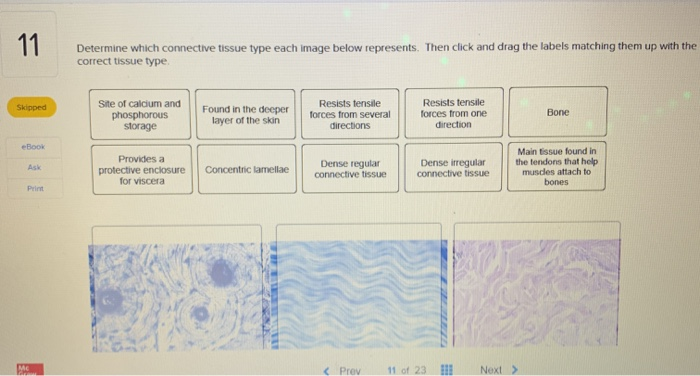
35 Drag Each Label Into The Proper Position To Identify The Type Of ...
Solved Drag and label into the proper position to identify - Chegg Transcribed image text: 7 Assignment Help Save Drag each label into the proper position to identify the type of bone cell described. Bone cells encased in matrix Overactivity results in increased bone density Differentiate into osteoblasts Abundant in mitochondria Stem cells Massive multinucleate cells Bone building Bone resorbing cells Trapped in lacunae es Have a ruffled Osteogenic Cells Osteoblasts Osteoclasts Osteocytes Bone cells encased in matrix Stem cells < Prev 30f 10 111 Next >
33 Drag Each Label Into The Proper Position To Identify The Type Of ...
Lisbdnet.com - rikwh.jar.airlinemeals.net what is a reflex biology. What Is A Reflex Biology? reflex, in biology, an action consisting of comparatively simple segments of behaviour that usually occur…

33 Drag Each Label Into The Proper Position To Identify The Type Of ...
Drag each label into the proper position to identify the type of bone ... 1. Differentiate into osteoblasts 2. Stem cells: 1. Bone building cell 2. Overactivity results in increased bone density: 1. Have a ruffled border2. Massive multinucleate cell. 3. Abundant in mitochondria

Biology Archive | March 03, 2017 | Chegg.com
Module 2 Skeletal System Flashcards | Quizlet Drag each label into the proper position to identify the type of bone described. Bone tissue is categorized into two major types: compact and spongy each possessing structural and functional aspects. Compact bone, the more dense of the two is well suited for withstanding high levels of mechanical stress and is found on the superficial portions of all bones and along the diaphyses of long bones.
Post a Comment for "41 drag each label into the proper position to identify the type of bone cell described"